In the Studio
Process
Bronze — her preferred material for being timeless, durable, expressive, technically challenging, and for the beauty of its patina.
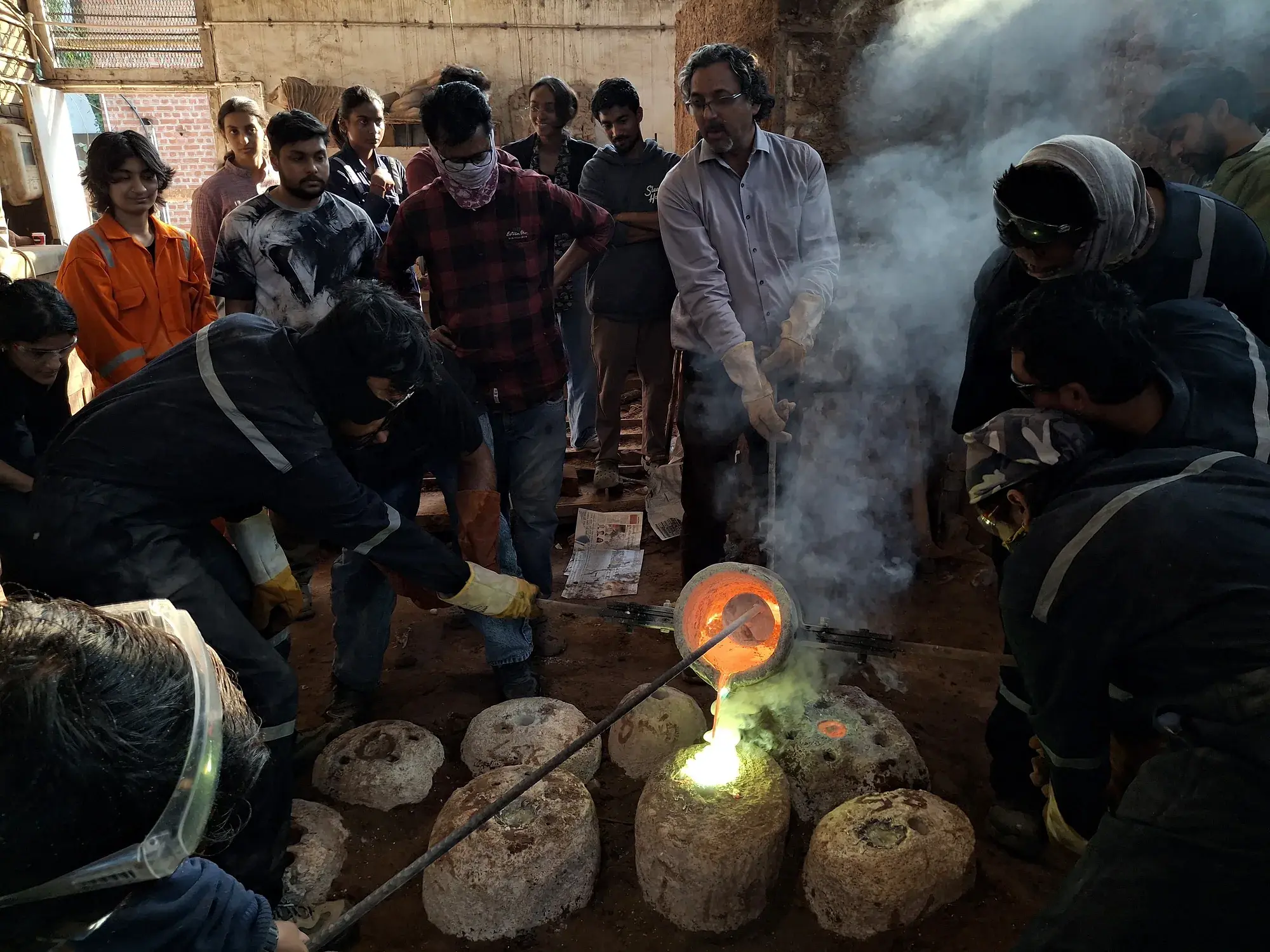
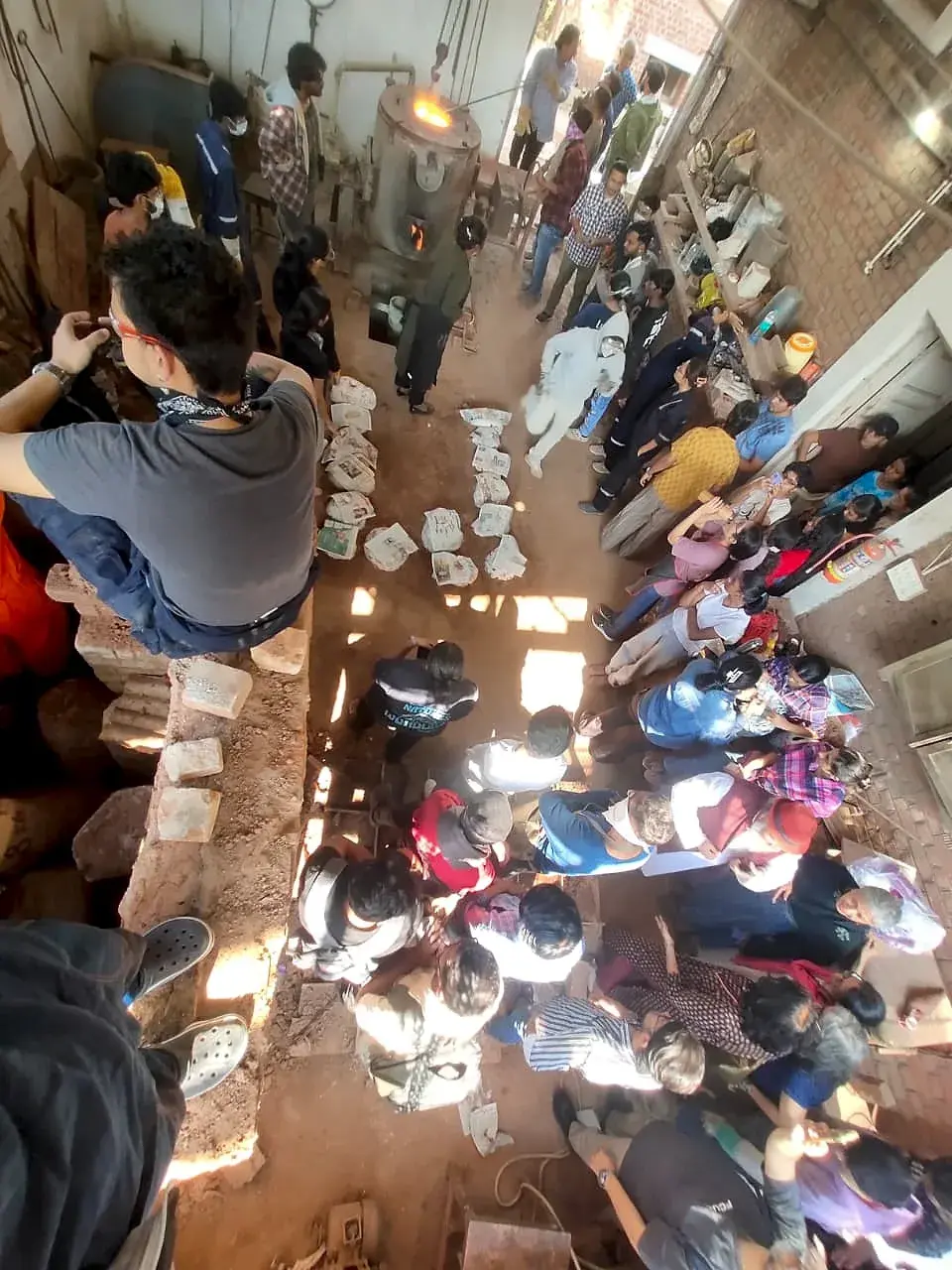
Metal Casting at the Faculty of Fine Arts
A live bronze-pour demonstration in the foundry at the Faculty of Fine Arts, The M.S. University of Baroda, where Shanta Samanta teaches students the lost-wax casting process firsthand.
A Scientist’s Eye
Before switching to art, Shanta Samanta studied science — a background she has said shaped her sculpture practice directly. Bronze casting and patination are, at their core, chemistry: controlled heat, metal, and reaction.
“My scientific knowledge provided me with a deeper understanding of the chemical aspects involved in my art, especially the metal casting and patination process. It also influenced my ability to work with precision and maintain the necessary discipline to achieve accurate and consistent results.”
“Achieving a beautiful patina on bronze is a challenging yet enjoyable task, as art is often filled with delightful surprises and happy accidents.”
Workshops & Materials
Beyond bronze, Shanta Samanta has organised and participated in numerous hands-on workshops across the sculpture department at The M.S. University of Baroda.
- Terracotta
- Raku
- Dokra
- Glass
- Ceramics
Where It Began
I once obtained riverbank clay and created my first sculpture when I was in 2nd standard, which was a portrait of Goddess Durga. My parents were deeply impressed, and their admiration served as a great source of motivation for me.